Rwanda Safe Travel Advice: The Real Danger of Rwanda for Solo-travelers
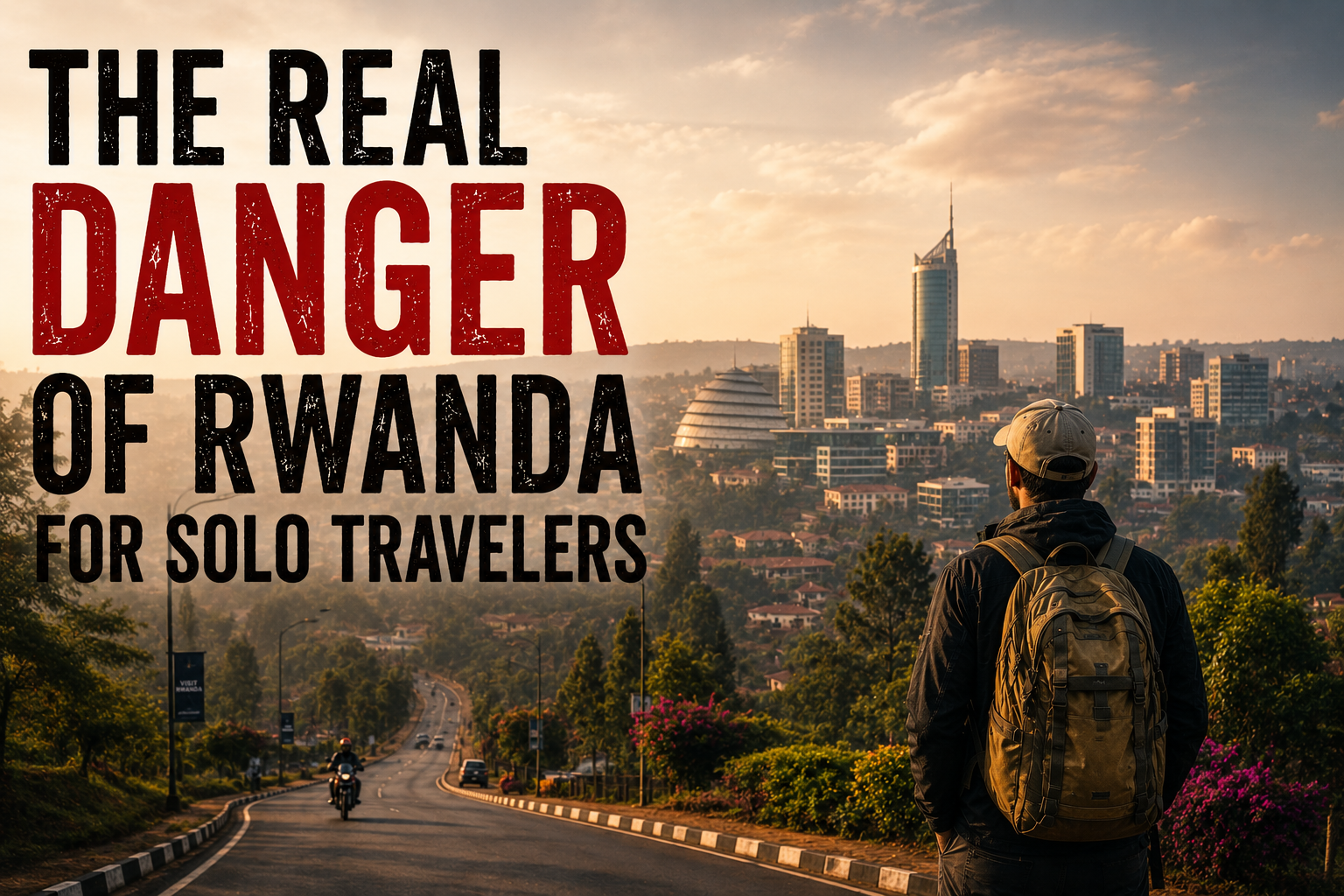
Each year, thousands of solo adventurers from all over the world travel across Africa.
They've found themselves in chaotic traffic where cars, motorcycles, buses, and pedestrians all seemed to be moving in their own directions. They've squeezed into minibuses carrying twenty people with only twelve seats. They've walked down dusty roads and arrived at their destination wearing half of it. And they've learned the habit of checking their pockets, their bags, and their surroundings. After a while, it simply becomes part of the adventure.
Then they arrive in Rwanda. And THAT's when the real danger begins.
Somehow, Rwanda has a way of slowly wearing down a solo traveler's mind. It starts influencing your travel plans, in some cases, even interrupt them entirely.
This blog will reveal the “real danger” of Rwanda for solo travelers.
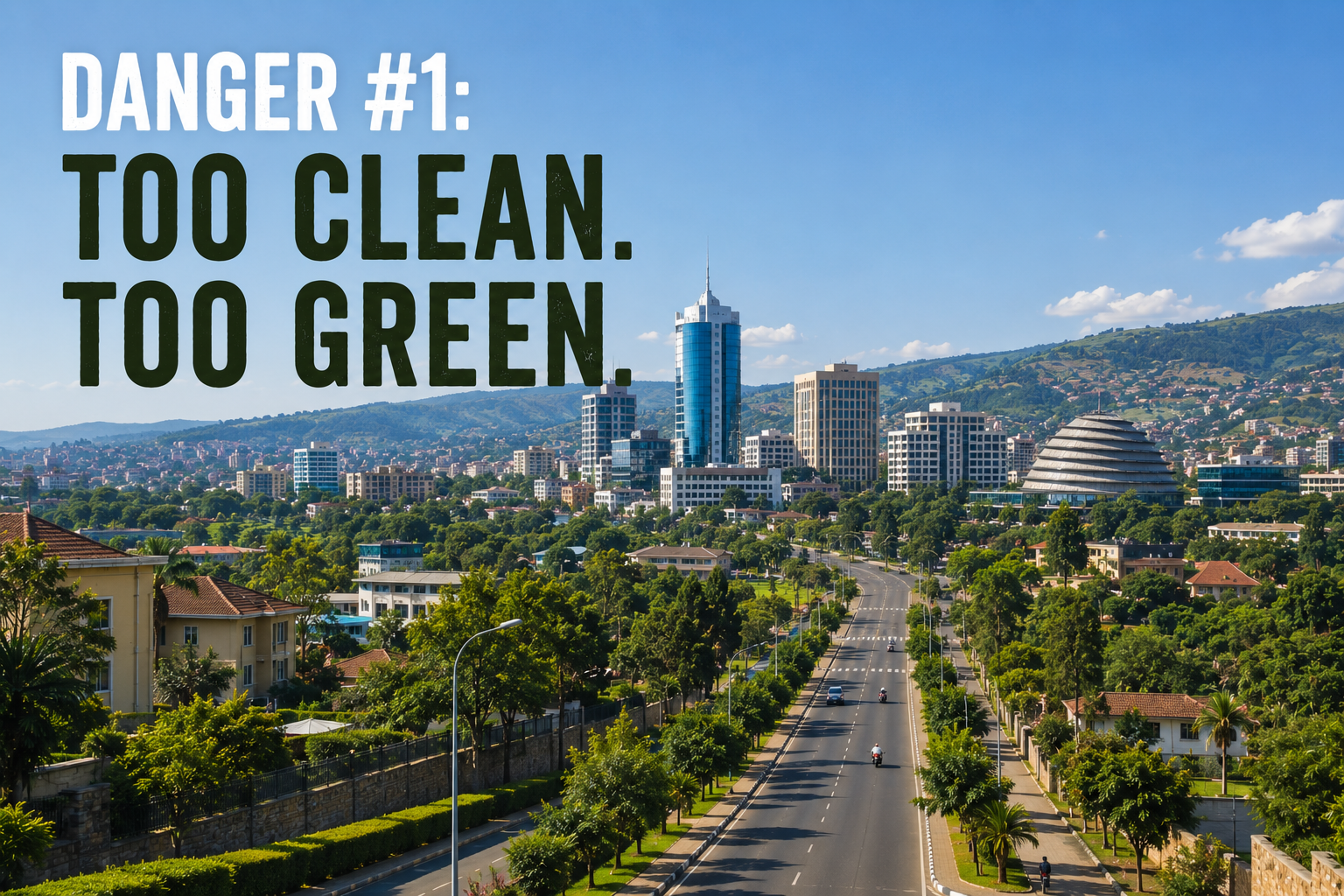
Danger #1: Too Clean. Too Green.
One of the first thoughts many travelers have when they arrive in Rwanda is: "Wait... am I still in Africa?"
There is a reason Rwanda is known as the Land of a Thousand Hills.
Everywhere you look, green hills stretch into the distance.
The streets are clean. The roadsides are clean. The city is surrounded by greenery.
And Before you realize, you've gotten so comfortable.
You get used to the fresh air, spotless streets, and all that green.
And if you had a choice, would you want to rush off to your next destination where the dust starts flying again?
Or would you stay just a little longer?
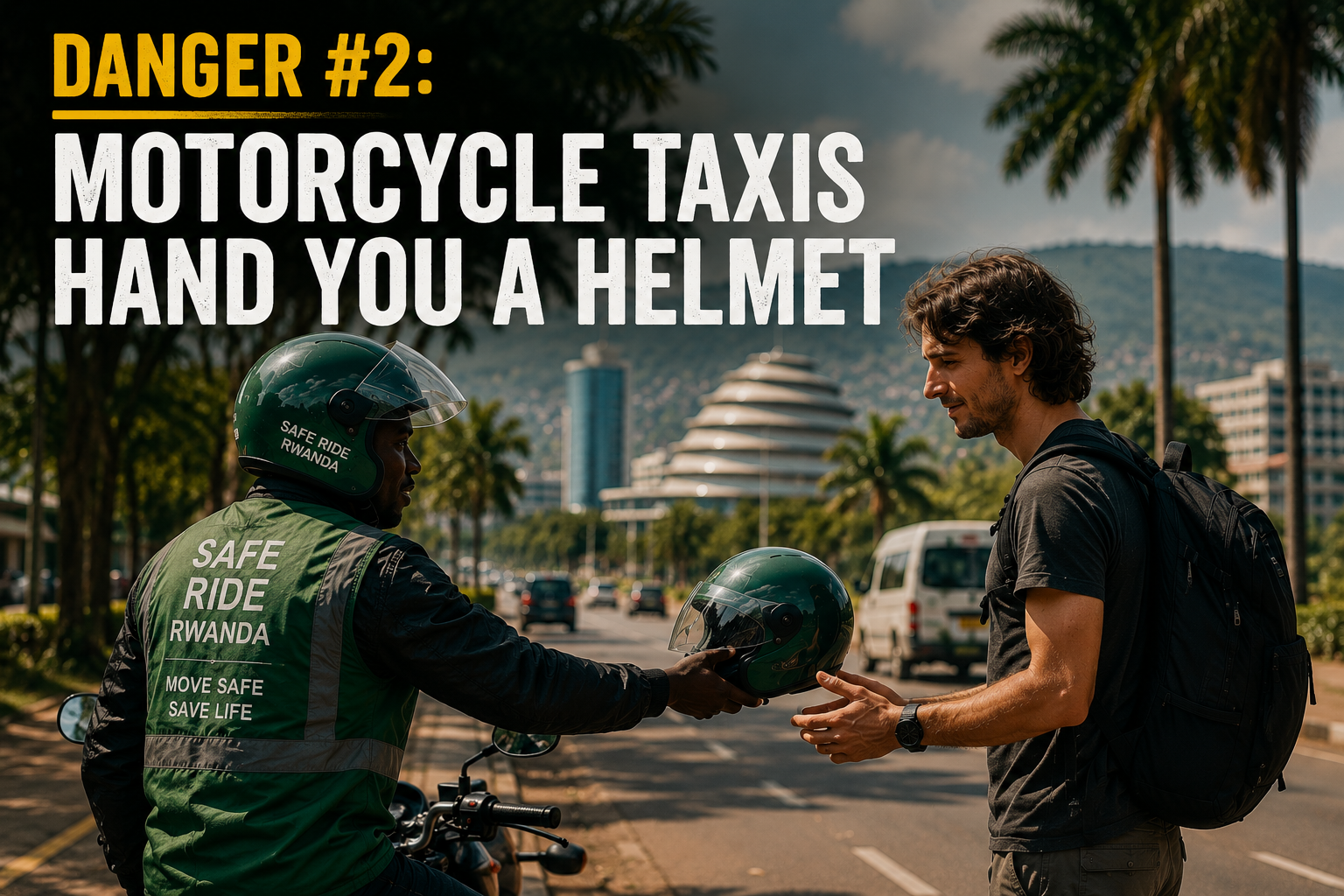
Danger #2: Motorcycle Taxis Hand You A Helmet
Many solo travelers who have spent time in Africa will tell you that motorcycle taxis can be an adventure all by themselves.
You climb on, hold on tight, hoping the rider has a plan.
Before you know it, you're squeezing between buses, weaving through traffic. Sometimes it feels like you're brushing shoulders with in coming cars.
It's tense. It's exhilarating. It's pure adrenaline.
Then you arrive in Rwanda. And suddenly, the rider hands you a helmet. Not because you're a tourist or you're special. Because that's simply how things are done here.
Then the ride starts. And it feels completely different. The roads are organized. The traffic flows. The rider isn't trying to set a new land speed record.
You find yourself relaxing and enjoying the view of the city instead of bracing yourself for the next intersection.
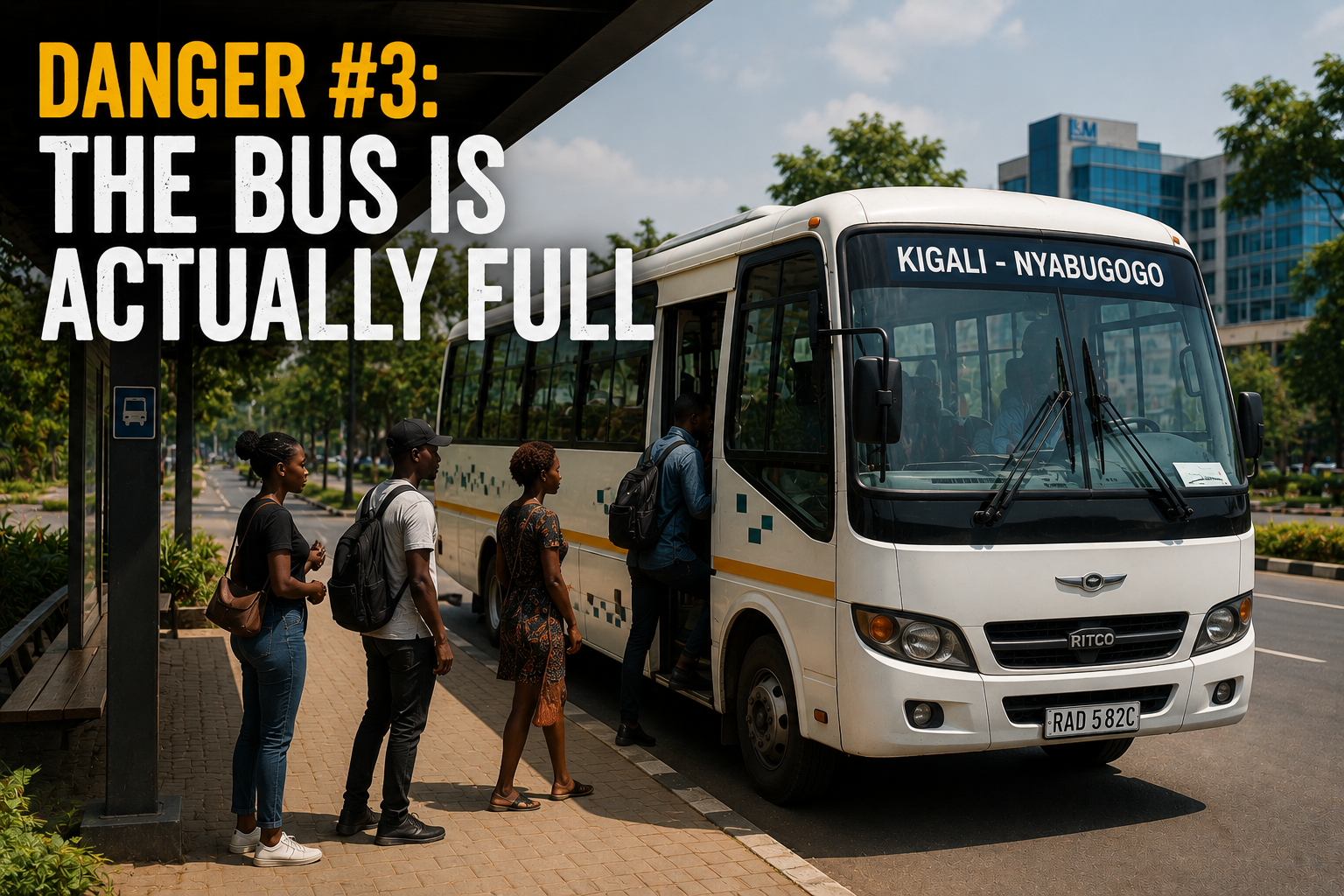
Danger #3: The Bus is Actually Full
One very important rule to learn when taking local buses in many African countries is this:
The bus is never full.
And by "never full," I mean there is always room for one more passenger.
Somehow, someone shifts. Someone squeezes.
The conductor gives up his own seat and spends the rest of the journey standing by the door.
A 12-seater somehow becomes a 15-seater, then a 20-seater. And nobody seems surprised.
Ocasionally, you may find yourself sitting next to a goat.
Then you arrive in Rwanda. The bus fills up, it leaves. Sometimes, it even leaves before every seat is taken. That's it
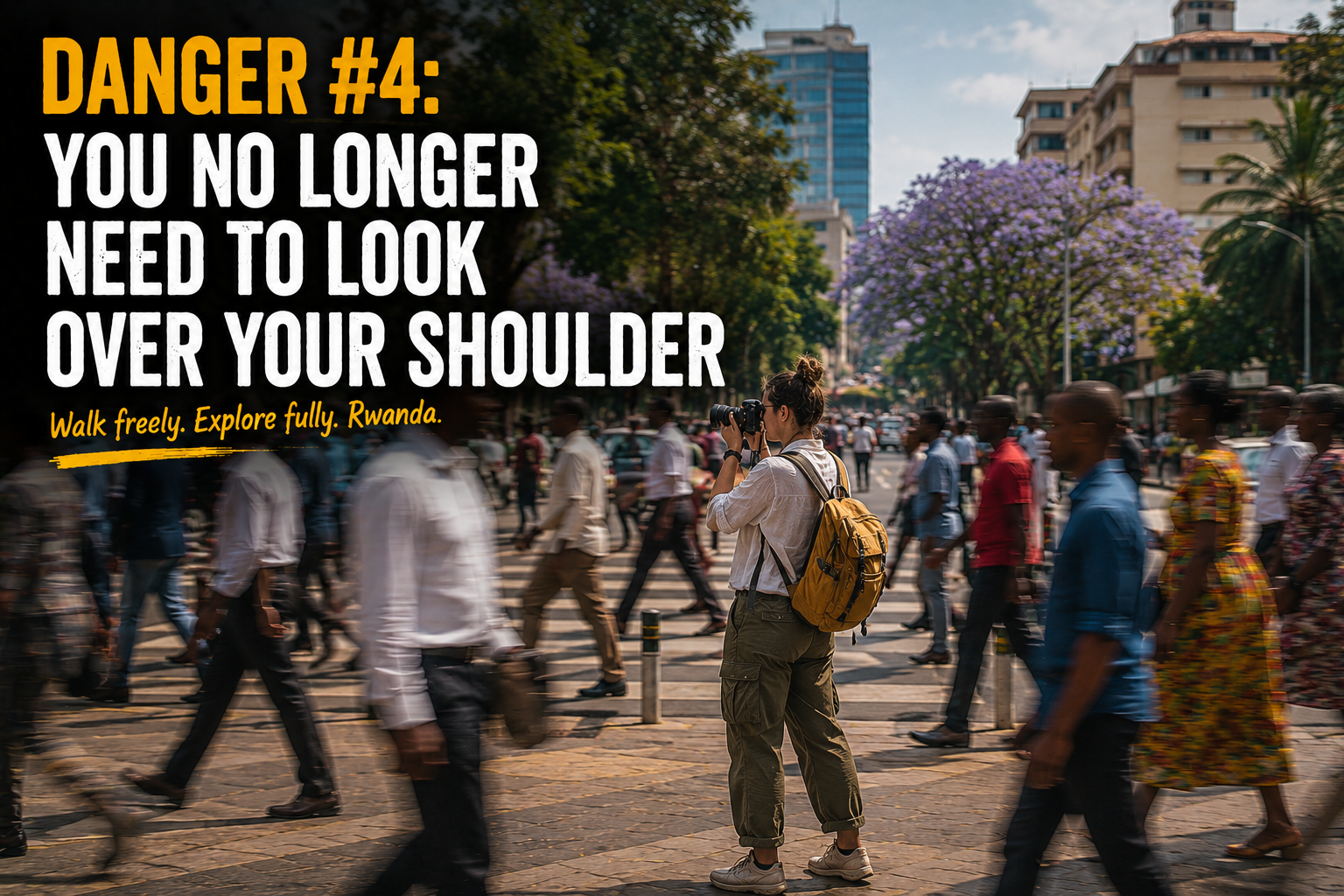
Danger #4: You No Longer Need to Look Over Your Shoulder
As a solo traveler, you develop habits.
You check your pockets, keep an eye on your backpack. You stay aware of who's around you. Especially in crowded places.
Then finally, you arrive in Rwanda.
A few days later, something strange begins to happen.
You stop checking your pockets every few minutes.
You stop wondering who's walking behind you.
Instead, you find yourself more present than before, paying attention to the city, the people, the architecture, the hills, the little moments unfolding around you.
Before you realize it, you've stopped looking over your shoulder.
You're simply exploring.
And that's exactly what makes Rwanda so dangerous.
Final Thoughts
So, my fellow travelers, should you avoid Rwanda? Absolutely. Not because it's dangerous in the way most people imagine. The real danger is much more subtle.
Rwanda slowly chips away at all the little defenses you've built while traveling. You get used to the clean streets, the organized transport, the sense of calm, and the freedom to explore without constantly looking over your shoulder.
Because one day you'll leave. And suddenly you'll find yourself comparing every destination to Rwanda, missing the cleanliness, the calm and the order, wondering why every bus doesn't leave when it's full and wishing every motorcycle taxi came with a helmet.
So yes, my fellow travelers. Avoid Rwanda.
Because once you get comfortable here, you may find it surprisingly difficult to leave.
Your Safe Haven in Kigali
And if you do decide to experience the dangers of Rwanda for yourself, we'd love to host you.
Tucked away from the noise of the city yet just minutes from Kigali's main attractions, our hotel offers the perfect balance of comfort, convenience, and value.
A peaceful place to recharge after a day of exploring the Land of a Thousand Hills.
After all, if Rwanda is already making it difficult to leave, you might as well stay somewhere that makes leaving even harder😉.